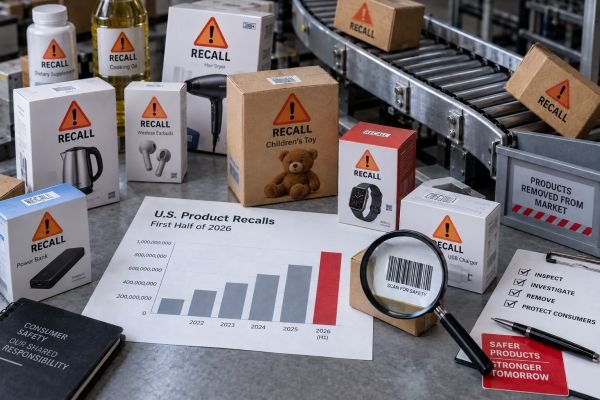
The number of products recalled in the United States has surged in 2026, with 941.2 million units affected during the first six months, putting the annual total on track to cross the one-billion mark, according to Sedgwick’s latest Product Safety and Recall Index.
The increase has occurred despite little change in the number of individual recall actions. Regulators recorded 1,634 recall events in the first half of 2026, compared with 1,636 during the same period last year. However, the volume of affected products jumped 345.5%, from 211.2 million units in H1 2025 to 941.2 million.
Pharmaceutical and medical-device recalls accounted for much of the increase. Recalled pharmaceutical units climbed 914% year over year to 471.6 million, while medical-device recalls reached 313.1 million units, an increase of 516.8%.
Food recalls also rose sharply. Products covered by U.S. Department of Agriculture recalls reached 37.2 million pounds, representing a 2,432.1% increase from the previous year and the third-highest annualized level recorded in more than 15 years.
Sedgwick’s analysis also points to regulatory and commercial pressures affecting companies. Authorities are increasing scrutiny of recall-related fraud, country-of-origin claims and product safety, while tariffs and changing international trade relationships are adding complexity for businesses.
The automotive sector faces additional restrictions involving certain Chinese hardware and software imports, along with limitations affecting some non-U.S. airbag inflators. Meanwhile, federal agencies continue testing food products and reviewing chemical-safety risks.
With July data already pushing U.S. recalls beyond one billion units for the year, the figures indicate that recall exposure is being driven increasingly by the size of individual events rather than their frequency.
The image is an illustration created with AI for general context.
Source: Sedgwick.
Follow the evolving insurance landscape through timely reporting, market analysis, industry updates, and coverage of emerging risks at Insurance Market and News.